top of page
Young farmers watching a tablet in a strawberry garden

Behavioral Insights

CBEAR works with conservation program administrators and their partners to incorporate behavioral insights into program designs. 

Our Briefs

Signing A Document

Enrollment Isn't Impact: Designing Conservation Programs to Improve Contract Completion

A behavioral look at research into conservation program success beyond the first step of enrollment.

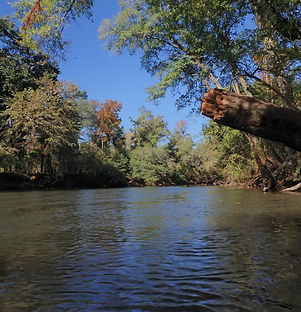
pretty water.jpg

Learning from the Georgia Flow Incentive Trust (GA-FIT)

Lessons in drought management from a joint venture between the Georgia Water Planning and Policy Center at Albany State University, The Nature Conservancy, and the University of Delaware.

EPSCor-SummerScholarRetreat-073.JPG

Advancing Undergraduate Education through Economic Experiments​

Summarizing 17 years of undegraduate research assistants in experimental economics: lessons learned and paths forward

AEnB2UqmNad2fA3xvWvPaog0JrJufCeLcvkH5yjvkN-23dYe3xyqzsiosAYwCRyWTKWPUfbhvUXECWikwSDo7t0q4T

The Pull of Social Comparisons

People look to what others are doing as a guide for their own behavior.

Image by Tomas Hertogh

The Costs of Complexity

The most sophisticated programs are the simplest.

Organic Beetroots

Gains from Avoiding Losses

It’s not just how much incentive you offer, but how you offer it.

Farm

Test, Learn, Adapt

Innovate by running experiments in your programs

Woman Shopping for Groceries

Labeling Success

People’s behaviors are motivated by labels. Labeling environmental practices used in food production can lead to higher consumer satisfaction, producer profits, and improved environmental outcomes. 

Fresh Cabbage

Ag-E MINDSPACE

Use this framework to strengthen your agri-environmental program with behavioral insights.

AdobeStock_510882339.jpeg

The Feral Hog Problem: Can A Cost-Share Program Help?

Trapping systems can be an effective method for managing feral hogs, but they are expensive. Would financial assistance through a

cost-share program increase

their adoption?

Farmers Harvesting Crops

Recruiting Farmers: Low-Cost and Costly Ways to Increase Farmer Response Rates

Step 1 of getting an agri-environmental program started is recruiting participants. We tested different recruitment strategies and evaluated their cost effectiveness.

Agricultural Fields

Overweighting Small Chances

Leveraging Randomness to Boost Participation

Harvesting Crop Field

Conservation 

Mitigation 

Outreach Experiment

Should climate change programs mention climate change?

cbearlogos (1)-09_edited.png

The Center of Behavioral & Experimental Agri-Environmental Research (CBEAR) is a global community of scientists studying what leads to the adoption and persistence of conservation most effectively.  We also test to determine whether simpler application processes can deliver higher levels of program participation and landowner satisfaction. 


​

© 2026 The Center for Behavioral and Experimental Agri-Environmental Research (CBEAR) is a USDA Center of Excellence.

bottom of page